
In today’s competitive business environment, simply having a website or social media profile is no longer enough. Customers now research products online, compare reviews, check prices, and engage with brands across multiple digital platforms before making a purchase. If your business is not visible where your customers spend their time, you’re losing valuable opportunities every single day. This is exactly where a digital marketing agency becomes a game changer.
A digital marketing agency is a team of professionals who help businesses grow using online marketing strategies. Instead of relying solely on traditional advertising methods such as newspapers, billboards, or television commercials, these agencies leverage modern digital channels like Google Search, social media, email marketing, paid advertising, search engine optimization (SEO), and content marketing to attract the right audience. Their primary goal is to increase your brand visibility, generate qualified leads, and convert visitors into loyal customers.
One of the biggest advantages of hiring a digital marketing agency is access to specialists with expertise across multiple disciplines. Rather than employing separate SEO experts, content writers, web developers, graphic designers, paid advertising specialists, and social media managers in-house, businesses can partner with one agency that provides all these services under one roof. This approach often saves both time and money while delivering more consistent results.
Another reason businesses choose agencies is their ability to adapt to rapidly changing digital trends. Search engine algorithms evolve frequently, advertising platforms introduce new features, and consumer behavior changes constantly. A reliable digital marketing agency stays updated with these developments and adjusts strategies accordingly. This ensures your business remains competitive while maximizing the return on every marketing investment.
Why Digital Marketing Matters More Than Ever
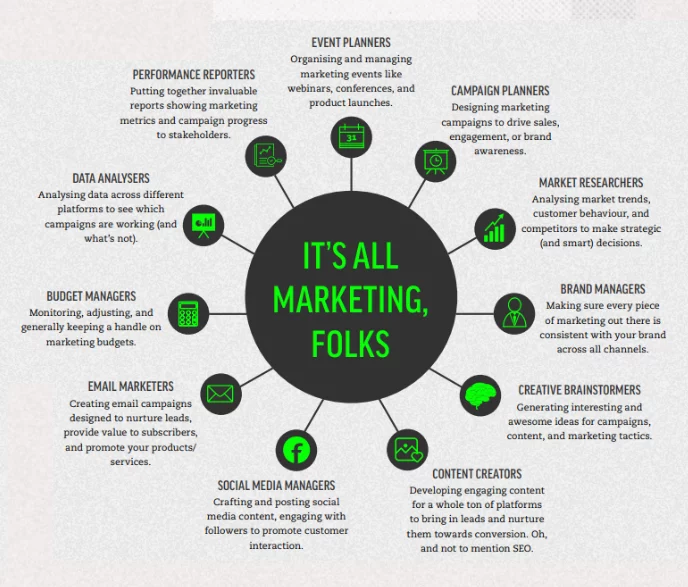
Consumer behavior has undergone a dramatic transformation over the last decade. Whether someone is looking for a restaurant, a lawyer, a fitness trainer, or a software company, their journey almost always begins with an online search. People trust search engines and online reviews before making purchasing decisions, making digital visibility one of the most valuable assets a business can possess.
Modern customers expect businesses to be present across multiple platforms. They want informative websites, engaging social media content, positive Google reviews, helpful blog articles, and fast responses to inquiries. If your competitors provide a better digital experience, potential customers are likely to choose them—even if your products or services are superior. A digital marketing agency helps ensure that every online interaction strengthens your brand and encourages customer trust.
Digital marketing also offers something traditional marketing rarely can: measurable results. Every click, impression, conversion, phone call, form submission, and purchase can be tracked and analyzed. This allows businesses to understand exactly what is working and where improvements are needed. Instead of guessing which marketing campaign generated results, agencies rely on real data to optimize performance and improve return on investment over time.
Perhaps the greatest strength of digital marketing is its scalability. Whether you operate a local business, a growing startup, or a large enterprise, digital marketing strategies can be tailored to match your budget and goals. As your business expands, your marketing efforts can grow alongside it, ensuring a continuous stream of qualified leads and sustainable long-term growth.
Services Offered by a Digital Marketing Agency
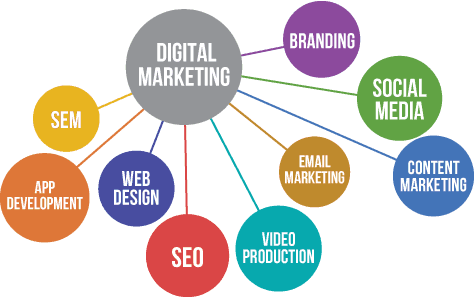
A professional digital marketing agency provides a wide range of services designed to help businesses build a strong online presence and achieve measurable growth. While every agency has its own specialties, most offer integrated marketing solutions that work together to improve visibility, generate leads, and increase revenue. Rather than focusing on a single marketing channel, agencies create comprehensive strategies that ensure every aspect of your digital presence contributes to business success.
One of the most valuable services is Search Engine Optimization (SEO). SEO helps your website rank higher on search engines like Google, making it easier for potential customers to discover your business organically. A strong SEO strategy includes keyword research, technical optimization, content creation, link building, and local SEO improvements. Over time, this increases website traffic without requiring continuous advertising spend.
Another essential service is Pay-Per-Click (PPC) Advertising, including Google Ads and Microsoft Ads. PPC campaigns allow businesses to appear at the top of search results almost instantly. Unlike SEO, which takes time to build momentum, paid advertising delivers immediate visibility. Agencies carefully research keywords, write compelling ad copy, optimize landing pages, monitor campaign performance, and continually refine targeting to maximize conversions while minimizing advertising costs.
Social Media Marketing has become equally important in today’s digital landscape. Agencies create engaging content for platforms such as Facebook, Instagram, LinkedIn, TikTok, and X. They also manage paid social campaigns, community engagement, audience targeting, and performance analysis. Combined with services like email marketing, website development, conversion rate optimization, content marketing, graphic design, and analytics reporting, these efforts create a complete digital ecosystem that supports sustainable business growth.
Benefits of Hiring a Digital Marketing Agency
Hiring a digital marketing agency is more than just outsourcing your marketing tasks—it is an investment in your company’s future. Many business owners attempt to handle marketing themselves while managing daily operations, customer service, sales, and finances. As a result, marketing often becomes inconsistent, outdated, or ineffective. A professional agency removes that burden by creating and executing a data-driven strategy that keeps your business growing while you focus on serving your customers.
One of the biggest advantages of working with a digital marketing agency is access to a team of specialists. Instead of relying on one person to manage SEO, social media, Google Ads, content writing, website optimization, and analytics, you gain an entire team of experts. Each specialist focuses on their area of expertise, ensuring every part of your marketing performs at its highest level. This collaborative approach often produces better results than hiring a single in-house marketer.
Another significant benefit is cost efficiency. Hiring a full-time SEO expert, PPC specialist, social media manager, content writer, graphic designer, and web developer can be expensive for most businesses. Salaries, software subscriptions, training, and employee benefits quickly add up. A digital marketing agency gives you access to all these professionals at a fraction of the cost, making it an ideal solution for startups and small businesses with limited budgets.
Professional agencies also bring experience gained from working with multiple industries. They understand what works, what doesn’t, and how customer behavior differs across different markets. This experience helps avoid costly mistakes and allows campaigns to perform more effectively from the beginning. Instead of experimenting with trial and error, businesses benefit from proven strategies that have already delivered results for similar companies.
Technology is another reason businesses partner with agencies. Modern digital marketing relies heavily on premium tools for SEO research, competitor analysis, website auditing, rank tracking, advertising optimization, customer relationship management, and performance reporting. Many of these tools cost hundreds or even thousands of dollars every month. Agencies already invest in these platforms and use them daily, giving their clients access to advanced insights without additional software expenses.
Perhaps the most valuable benefit is accountability. A reputable digital marketing agency measures everything. Website traffic, keyword rankings, lead generation, conversion rates, advertising costs, return on investment, customer acquisition costs, and engagement metrics are all tracked regularly. These reports help business owners understand exactly where their marketing budget is being spent and how it contributes to revenue growth. This transparency allows better decision-making and continuous improvement over time.
How a Digital Marketing Agency Helps Increase Sales and Revenue
Every business ultimately shares the same objective: generating more revenue. While attracting website visitors is important, traffic alone does not guarantee business success. The true value of a digital marketing agency lies in its ability to convert visitors into paying customers through carefully planned marketing strategies.
The customer journey begins with awareness. Most potential buyers don’t wake up already knowing about your business. They first discover your brand through search engines, social media posts, YouTube videos, online advertisements, blog articles, or referrals. A digital marketing agency ensures your business appears wherever your ideal customers are searching. This consistent visibility builds familiarity and trust before customers even contact you.
Once visitors arrive on your website, the next challenge is keeping them engaged. Agencies optimize website speed, improve navigation, create compelling landing pages, write persuasive copy, and design strong calls-to-action that encourage visitors to take the next step. Whether the goal is requesting a quote, booking a consultation, making a purchase, or filling out a contact form, every page is designed to increase conversions rather than simply generate traffic.
Lead nurturing is another area where agencies create significant value. Most visitors don’t buy immediately after their first interaction. They may compare competitors, conduct additional research, or wait until they are ready to make a decision. Through email marketing campaigns, remarketing advertisements, educational content, and social media engagement, agencies continue building relationships until prospects become customers. This long-term approach often leads to higher conversion rates and stronger customer loyalty.
Data analysis plays a critical role throughout the entire process. Agencies continuously monitor campaign performance, identify high-performing keywords, eliminate underperforming advertisements, improve audience targeting, and optimize landing pages based on user behavior. Small improvements across multiple areas often produce substantial increases in overall revenue. Rather than relying on assumptions, every decision is supported by measurable data.
Businesses that consistently invest in digital marketing also benefit from brand authority. When potential customers repeatedly encounter your website in Google search results, read valuable blog content, watch educational videos, and see positive customer reviews, your business naturally becomes more trustworthy. This credibility shortens the buying cycle and increases the likelihood that customers choose your company over competitors offering similar products or services.
Why Small Businesses Should Hire a Digital Marketing Agency
Many small business owners believe digital marketing agencies are only suitable for large corporations with substantial budgets. In reality, small businesses often benefit the most because they need efficient marketing strategies that maximize every marketing dollar.
Small businesses typically operate with limited resources. Owners frequently manage operations, customer service, hiring, accounting, inventory, and marketing simultaneously. This leaves little time to develop long-term digital marketing strategies. A professional agency allows business owners to focus on running their company while experienced marketers handle customer acquisition and online growth.
Another challenge small businesses face is competing against established brands. Larger companies often have bigger advertising budgets and stronger brand recognition. Fortunately, digital marketing creates opportunities where creativity and strategy can outperform spending alone. Through local SEO, high-quality content, targeted Google Ads, and community-focused social media campaigns, smaller businesses can successfully compete within their local markets.
Local SEO deserves particular attention for small businesses. When someone searches for services like “dentist near me,” “best restaurant in Mumbai,” or “digital marketing agency near me,” Google prioritizes businesses with optimized local profiles, positive customer reviews, accurate business information, and relevant local content. Agencies specialize in improving these factors, helping local businesses appear prominently in Google Maps and local search results where customers are actively looking to make purchasing decisions.
Marketing consistency is another major advantage. Business owners often begin posting regularly on social media or publishing blog articles but eventually become too busy to maintain their efforts. Inconsistent marketing reduces visibility and weakens customer engagement. Agencies create content calendars, schedule campaigns, publish articles consistently, and monitor performance throughout the year, ensuring your business remains visible even during your busiest periods.
As the business grows, marketing requirements become more complex. New products require promotional campaigns, expanding service areas require local SEO strategies, and increasing competition demands continuous optimization. A digital marketing agency scales its services alongside your business, allowing marketing efforts to grow without requiring constant recruitment or additional internal resources.
Digital Marketing Agency vs In-House Marketing Team
Choosing between hiring a digital marketing agency and building an in-house marketing team is an important decision. Both options have advantages, but the right choice depends on your business goals, budget, and growth stage.
| Feature | Digital Marketing Agency | In-House Marketing Team |
|---|---|---|
| Initial Cost | Lower | Higher |
| Access to Specialists | Full Team | Limited |
| Marketing Tools | Included | Separate Purchase Required |
| Experience Across Industries | High | Limited |
| Scalability | Easy | Slow |
| Training Requirements | None | Continuous |
| Campaign Launch Speed | Fast | Moderate |
| Reporting & Analytics | Comprehensive | Depends on Team |
For most startups and small to medium-sized businesses, partnering with a digital marketing agency offers greater flexibility and faster results. Larger enterprises may eventually combine both approaches, using an internal marketing manager while outsourcing specialized services such as SEO, PPC advertising, or technical website optimization.
Real-World Example: How a Digital Marketing Agency Transforms a Business
Imagine a local furniture store that relies mainly on walk-in customers and word-of-mouth referrals. Although the products are excellent, sales remain stagnant because potential customers rarely discover the business online. The owner decides to hire a digital marketing agency to improve visibility and generate consistent leads.
The agency begins by redesigning the website to improve user experience and mobile responsiveness. They optimize product pages with relevant keywords, create location-specific landing pages, claim and optimize the Google Business Profile, and publish informative blog posts targeting common customer questions. At the same time, they launch Google Ads campaigns focused on buyers actively searching for furniture in the local area.
Within a few months, the website starts attracting more organic traffic through improved search engine rankings. Paid advertisements generate immediate inquiries, while social media campaigns showcase new product collections and customer testimonials. Email marketing encourages previous buyers to return with exclusive offers, and remarketing ads reconnect with visitors who previously left the website without making a purchase.
Instead of relying solely on walk-in traffic, the business now receives a steady flow of online inquiries, appointment bookings, and product orders. More importantly, every marketing activity is measured, allowing the agency to continually optimize campaigns and improve return on investment. This example illustrates how a well-planned digital marketing strategy can transform a traditional business into a modern, customer-focused brand that grows consistently.
Common Mistakes Businesses Make When Hiring a Digital Marketing Agency
Choosing the right digital marketing agency is one of the most important decisions for your business. Unfortunately, many companies rush the process and end up partnering with agencies that promise unrealistic results but fail to deliver. A poor choice can waste your budget, damage your online reputation, and delay your business growth. Understanding the common mistakes businesses make can help you avoid costly decisions and build a long-term partnership with an agency that genuinely contributes to your success.
One of the biggest mistakes is selecting an agency based solely on price. While staying within budget is important, the cheapest option rarely delivers the best results. Quality digital marketing requires experienced professionals, premium SEO tools, strategic planning, content creation, and continuous optimization. Agencies offering extremely low prices often cut corners, outsource work without quality control, or use outdated SEO techniques that may harm your website in the long run. Instead of asking, “Which agency is the cheapest?” ask, “Which agency offers the best value for my investment?”
Another common mistake is believing guarantees such as “Rank #1 on Google in 30 days.” No legitimate agency can promise first-page rankings because search engine algorithms consider hundreds of ranking factors that no one fully controls. Ethical agencies focus on improving your website’s authority, user experience, technical SEO, and content quality rather than making unrealistic promises. If an agency guarantees instant rankings, it’s often a warning sign that they may use risky black-hat SEO practices that could lead to search engine penalties.
Many businesses also fail to define clear goals before hiring an agency. Do you want more website traffic, qualified leads, online sales, local visibility, or stronger brand awareness? Different objectives require different strategies. Without measurable goals, it’s difficult to evaluate campaign performance or calculate return on investment. A professional digital marketing agency will ask detailed questions about your business objectives before recommending a customized marketing plan rather than offering the same package to every client.
Communication is another factor that businesses frequently overlook. Marketing is an ongoing process that requires regular collaboration. Agencies should provide transparent reporting, explain campaign performance in simple language, and remain available to answer questions. Businesses that receive little communication often struggle to understand how their marketing budget is being used. Choosing an agency that values transparency builds trust and ensures both parties remain aligned toward the same goals.
How to Choose the Best Digital Marketing Agency
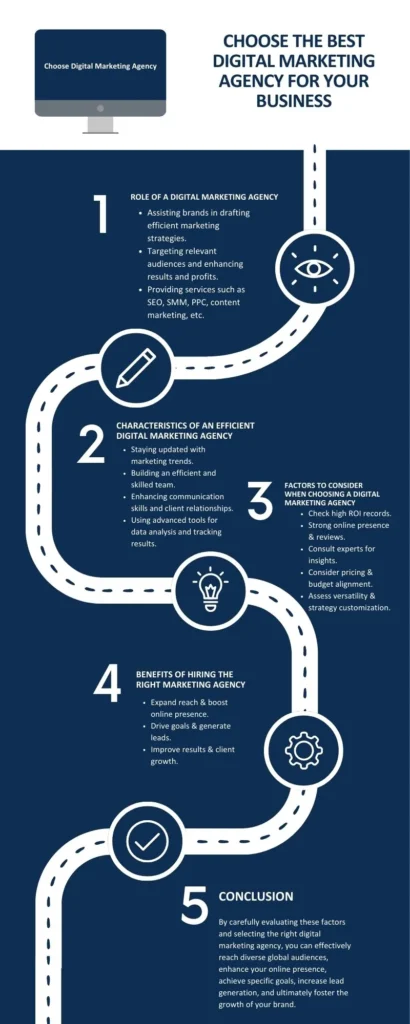
Finding the right digital marketing agency requires careful research rather than making a quick decision based on advertisements or social media posts. The best agency isn’t necessarily the largest one—it is the agency that understands your business, communicates clearly, and demonstrates a proven ability to achieve measurable results.
Start by reviewing the agency’s own online presence. If they claim to specialize in SEO, their own website should rank well for relevant keywords. Their website should load quickly, provide valuable content, and offer a professional user experience. A company that cannot effectively market itself may struggle to market your business successfully. Examine their blog, case studies, testimonials, and client portfolio to understand the quality of their work and the industries they have served.
Experience is another important consideration. Ask whether the agency has worked with businesses similar to yours. Industry-specific knowledge can significantly reduce the learning curve and improve campaign performance. An agency familiar with local businesses, e-commerce stores, healthcare providers, real estate companies, or professional services will already understand common customer behaviors and competitive challenges within those markets.
Transparency should also be a deciding factor. A trustworthy digital marketing agency explains exactly what services are included, how success will be measured, and what reporting you can expect. Monthly performance reports should include metrics such as website traffic, keyword rankings, lead generation, advertising performance, conversion rates, and return on investment. Avoid agencies that provide vague updates without supporting data or refuse to explain their strategies.
Customer reviews provide valuable insights into an agency’s reliability and professionalism. Check Google reviews, LinkedIn recommendations, and independent review platforms to understand how previous clients describe their experiences. Look for consistent feedback about communication, responsiveness, campaign performance, and long-term results rather than focusing only on overall ratings.
Finally, schedule a consultation before making your decision. Use this opportunity to discuss your goals, ask detailed questions, and evaluate how well the agency understands your business. A quality agency will spend more time learning about your company than trying to sell you a package. Their recommendations should feel customized rather than generic.
How Much Does a Digital Marketing Agency Cost?
One of the first questions business owners ask is, “How much does a digital marketing agency cost?” The answer depends on several factors, including the services required, business size, competition, target audience, and campaign objectives. There is no universal pricing model because every business has unique marketing needs.
SEO services are generally priced as monthly retainers because search engine optimization is an ongoing process rather than a one-time project. PPC advertising management usually involves a monthly management fee in addition to your advertising budget. Website development, branding, and content creation may be offered as fixed-price projects, while social media management often follows monthly subscription packages.
Here’s a general comparison of common services:
| Service | Typical Pricing Model |
|---|---|
| SEO | Monthly Retainer |
| Google Ads Management | Monthly Fee + Ad Spend |
| Social Media Management | Monthly Package |
| Website Development | One-Time Project |
| Content Marketing | Monthly or Per Article |
| Email Marketing | Monthly Package |
| Local SEO | Monthly Retainer |
Rather than choosing the cheapest option, businesses should evaluate potential return on investment. A well-executed SEO campaign can generate qualified leads for years, while optimized advertising campaigns can significantly increase revenue. Marketing should be viewed as an investment that contributes to business growth rather than simply another operating expense.
Future Trends Shaping Every Digital Marketing Agency
Digital marketing continues to evolve rapidly, and agencies that embrace innovation are better positioned to help businesses remain competitive. Artificial intelligence is transforming content creation, customer support, advertising optimization, and data analysis. AI-powered tools help marketers identify opportunities more quickly while automating repetitive tasks, allowing greater focus on strategy and creativity.
Voice search is becoming increasingly important as consumers use smart speakers and voice assistants to search for products and services. This shift encourages businesses to optimize content for conversational search queries rather than relying solely on traditional keywords. Agencies are adapting SEO strategies to match these changing search behaviors.
Video marketing continues to dominate online engagement. Short-form videos on platforms like Instagram Reels, YouTube Shorts, and TikTok generate significant user interaction and influence purchasing decisions. Businesses investing in high-quality video content often experience stronger engagement and higher conversion rates compared to text-only campaigns.
Personalization is another major trend. Modern consumers expect brands to deliver relevant recommendations, personalized emails, and customized advertising experiences based on their interests and previous interactions. Digital marketing agencies increasingly use customer data to create highly targeted campaigns that improve user experience while increasing marketing effectiveness.
Privacy regulations and changes in third-party cookie tracking are also reshaping digital marketing strategies. Agencies are placing greater emphasis on first-party data, email marketing, customer relationship management systems, and consent-based data collection to ensure compliance while maintaining effective audience targeting.
Conclusion
A digital marketing agency is far more than a service provider—it is a strategic partner that helps businesses grow through data-driven marketing, creative campaigns, and measurable results. From improving search engine rankings and managing paid advertising to creating engaging content and optimizing conversion rates, agencies provide the expertise required to compete in today’s digital-first marketplace.
Whether you’re a startup, a local business, or an established company, investing in professional digital marketing allows you to reach more customers, strengthen your brand, and generate sustainable long-term growth. Success doesn’t come from using every marketing channel—it comes from using the right channels with the right strategy at the right time.
The key is choosing an agency that understands your goals, communicates transparently, follows ethical marketing practices, and continuously optimizes campaigns based on real performance data. When the right partnership is established, digital marketing becomes one of the most powerful growth investments your business can make.
Frequently Asked Questions (FAQs)
1. What does a digital marketing agency do?
A digital marketing agency helps businesses grow online through services such as SEO, Google Ads, social media marketing, content marketing, website development, email marketing, and conversion optimization. Their objective is to increase visibility, attract qualified leads, and improve revenue.
2. Is hiring a digital marketing agency worth it?
Yes. Businesses gain access to experienced specialists, advanced marketing tools, proven strategies, and measurable results without the expense of building a full in-house marketing department.
3. How long does SEO take to show results?
SEO is a long-term strategy. Most websites begin seeing meaningful improvements within 3 to 6 months, while highly competitive industries may require more time depending on competition and website authority.
4. How do I choose the best digital marketing agency?
Look for an agency with proven experience, transparent reporting, positive client reviews, customized strategies, ethical SEO practices, and a portfolio demonstrating measurable business results.
5. Which businesses should hire a digital marketing agency?
Almost every business can benefit, including startups, local businesses, e-commerce stores, healthcare providers, educational institutions, real estate companies, consultants, and large enterprises looking to improve their online presence.